

HOUSTON DRIVEWAYS · NEW · REPLACEMENT · WIDENING · RV PADS
Concrete Driveways in Houston
A great driveway starts
with what's underneath.
A Blue Jay driveway is four inches minimum, 3,000 PSI or better, with rebar on chairs over compacted select fill. Those numbers matter because the base, the steel, and the compaction decide how long your driveway lasts, and they all disappear the day we pour. So we publish the spec for that work, photograph it before concrete covers it, and price the whole job in the open. You'll always know what you're getting.
Crews with 16 years in the trade General liability insured, certificate on request
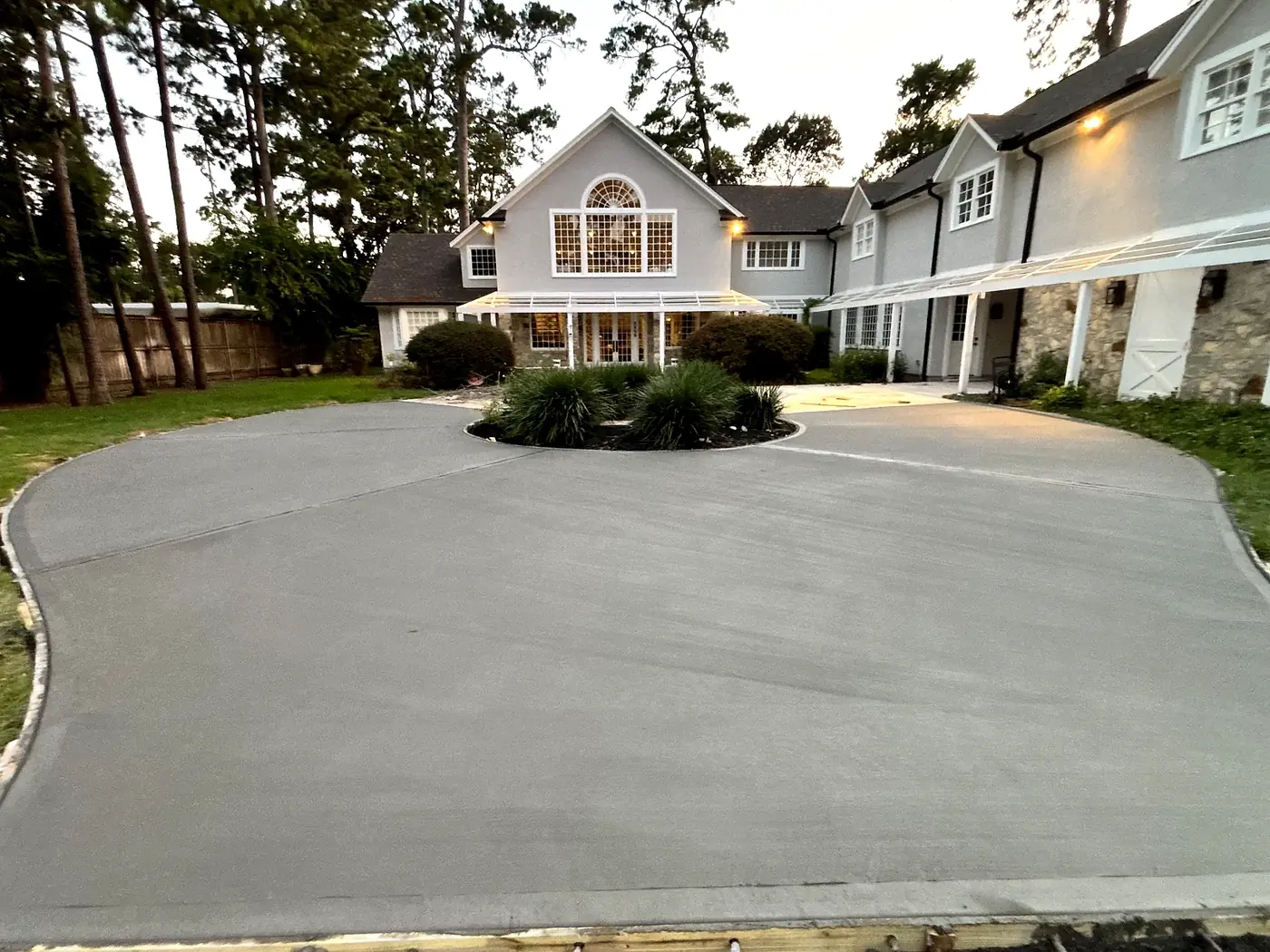
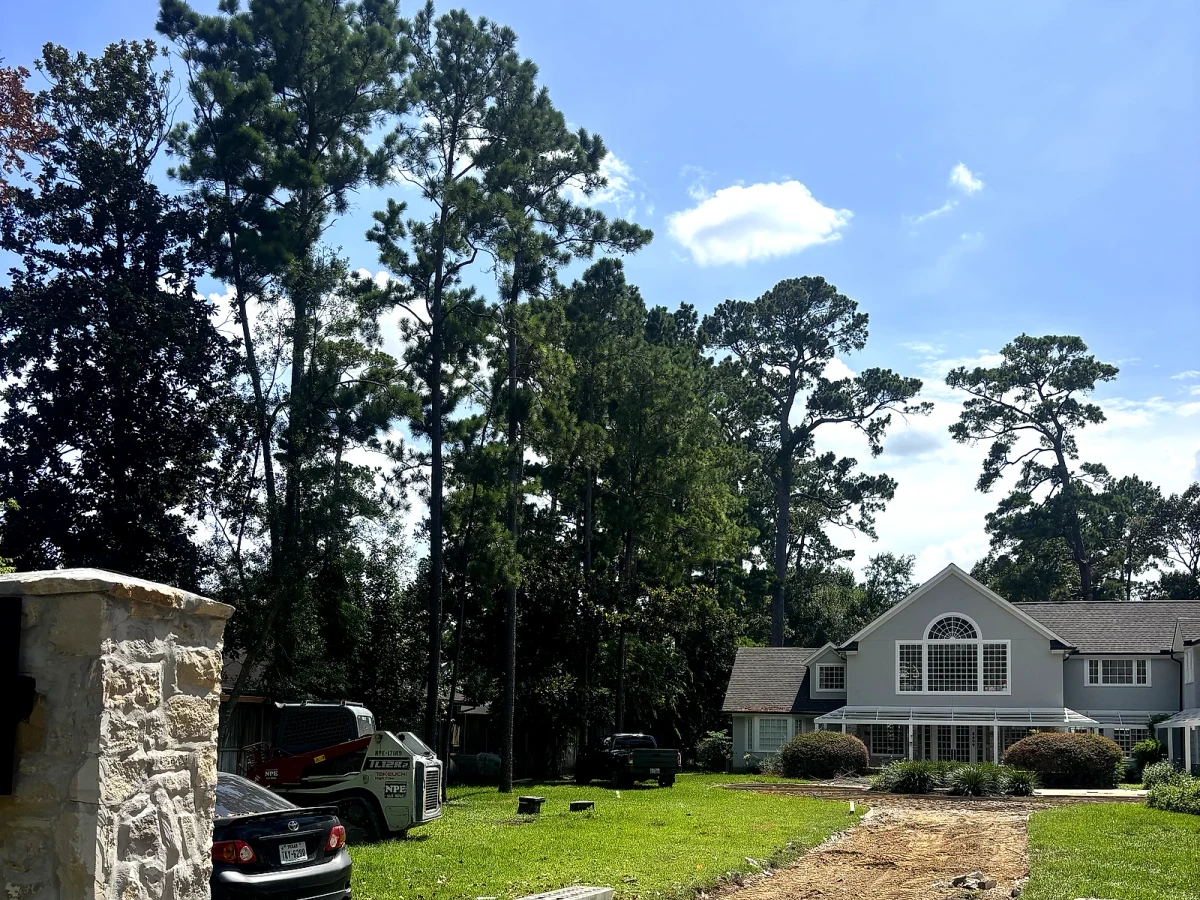
One property, one crew, start to finish. Every pour gets documented at every phase.
FIVE THINGS MOVE THE NUMBER
What drives driveway cost
Every driveway price comes down to the same five variables, measured and priced. Once you know them, comparing quotes gets a lot easier, and ours will read clearly line by line. Happy to talk through any of them with you.
Dimensions
Length times width sets the concrete, steel, forming, and finishing labor. Per-foot cost falls as the job grows, because the crew and the truck cost the same either way.
Thickness
Four inches is the residential standard for cars and pickups. Heavier loads (an RV, a boat on a triple-axle trailer) need a thicker slab and more steel, and the price follows the depth.
Base condition
The prep bill depends on what we find: stable ground, or soft spots, tree roots, and washout that need correcting first. It's the part of the job that varies most from yard to yard, so we look carefully before we quote.
Removal & haul-off
Replacing a driveway means breaking out the old one, hauling it, and paying disposal by weight. Demo is a real line item, and we put it in the quote up front so there are no surprises mid-job.
Finish
Broom finish is the driveway workhorse: durable and grippy in rain. Exposed aggregate and decorative borders add skilled hours on the tools, and the total moves with them.
The full method
How we turn these five into your quote, plus honest Houston market context from published cost guides, lives on the pricing page.
See how we price →FOUR KINDS OF DRIVEWAY JOB
New, replacement, widening, RV pad
New driveway
A first pour on a new build or a lot that never had one. We form to final grade, match the garage slab elevation so water runs away from the house, and tie the approach cleanly into the street or existing apron.
Full replacement
Tear-out is the one chance to fix whatever killed the old driveway: roots under the slab, a washed-out corner, base that was never compacted. We diagnose the failure before we rebuild, because pouring new concrete over an old problem just schedules the next one.
Widening & extra parking
A third-car strip or a wider approach, tied into your existing slab with doweled joints and matched elevations. One honest warning up front: new concrete never perfectly matches thirty-year-old concrete. The color difference fades with weathering, but it doesn't vanish. We'd rather tell you that now than let you find out at the walkthrough.
RV & heavy-vehicle pads
A loaded RV concentrates several times the weight of a family car, so a standard four-inch slab isn't the right fit for it. RV pads get poured thicker, typically five to six inches, with heavier steel and a base built for the load. Tell us what you're parking and we'll spec the pad to carry it comfortably.
POURED BY OUR CREWS
Driveways we've stood on
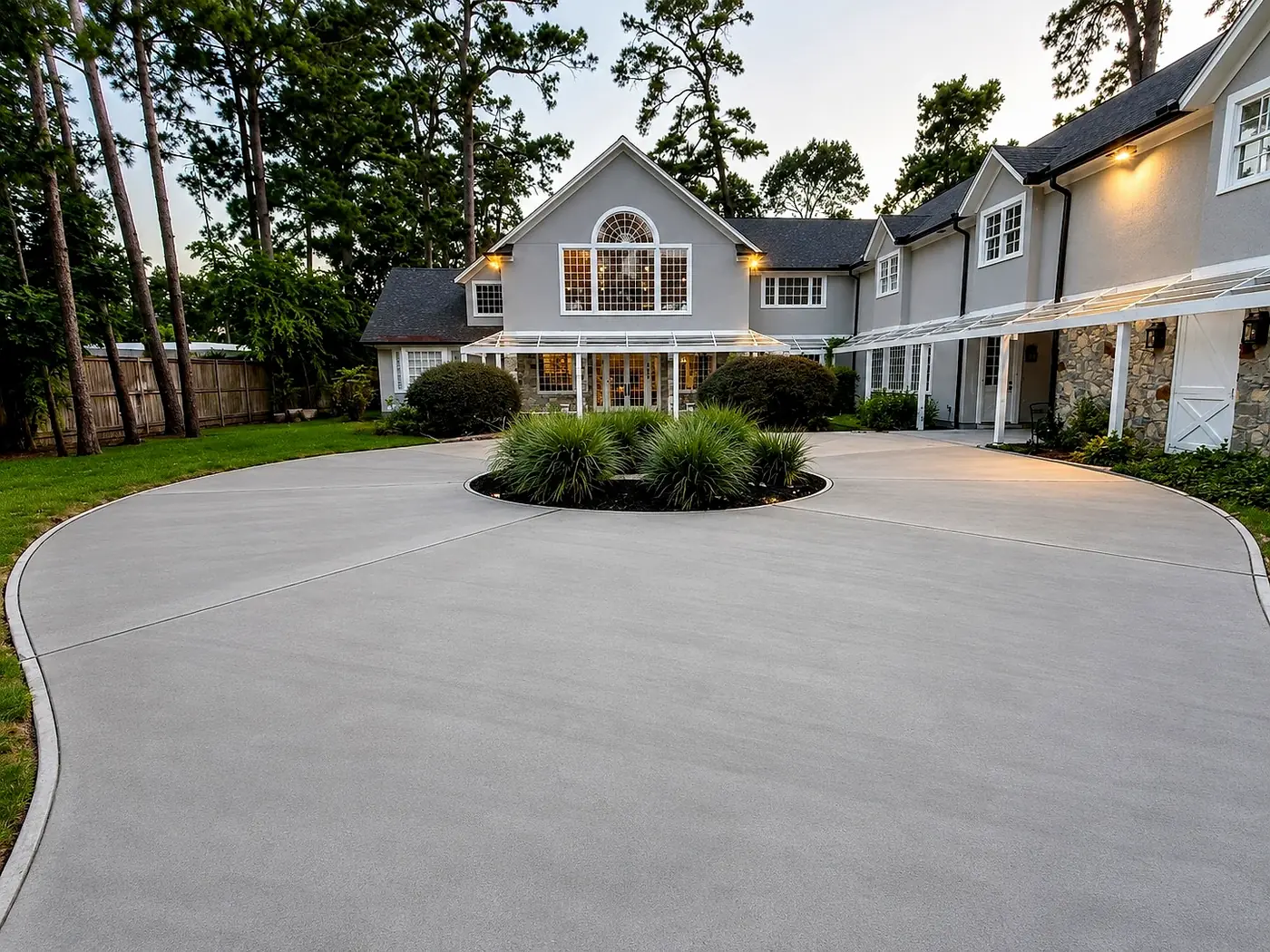
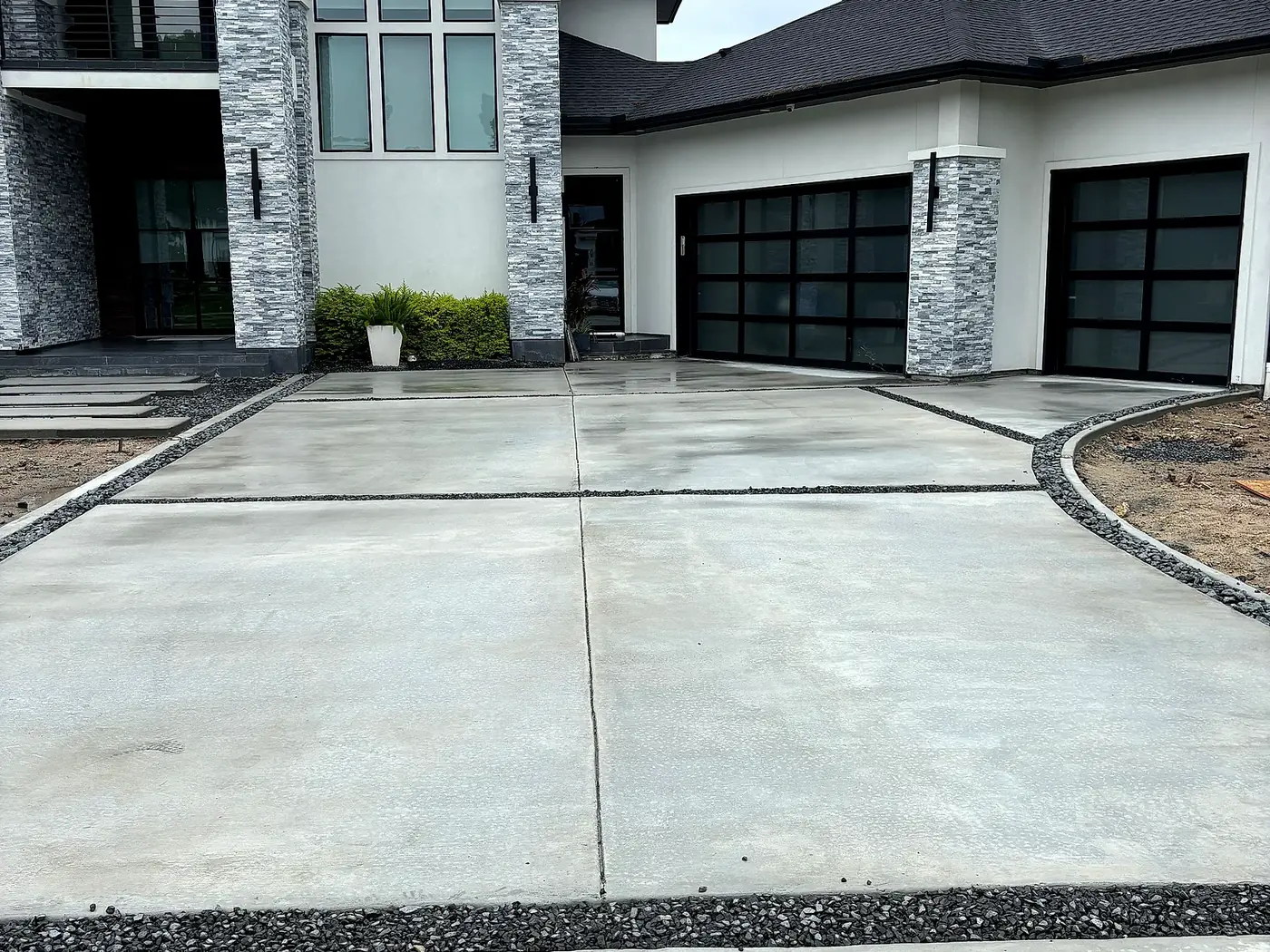
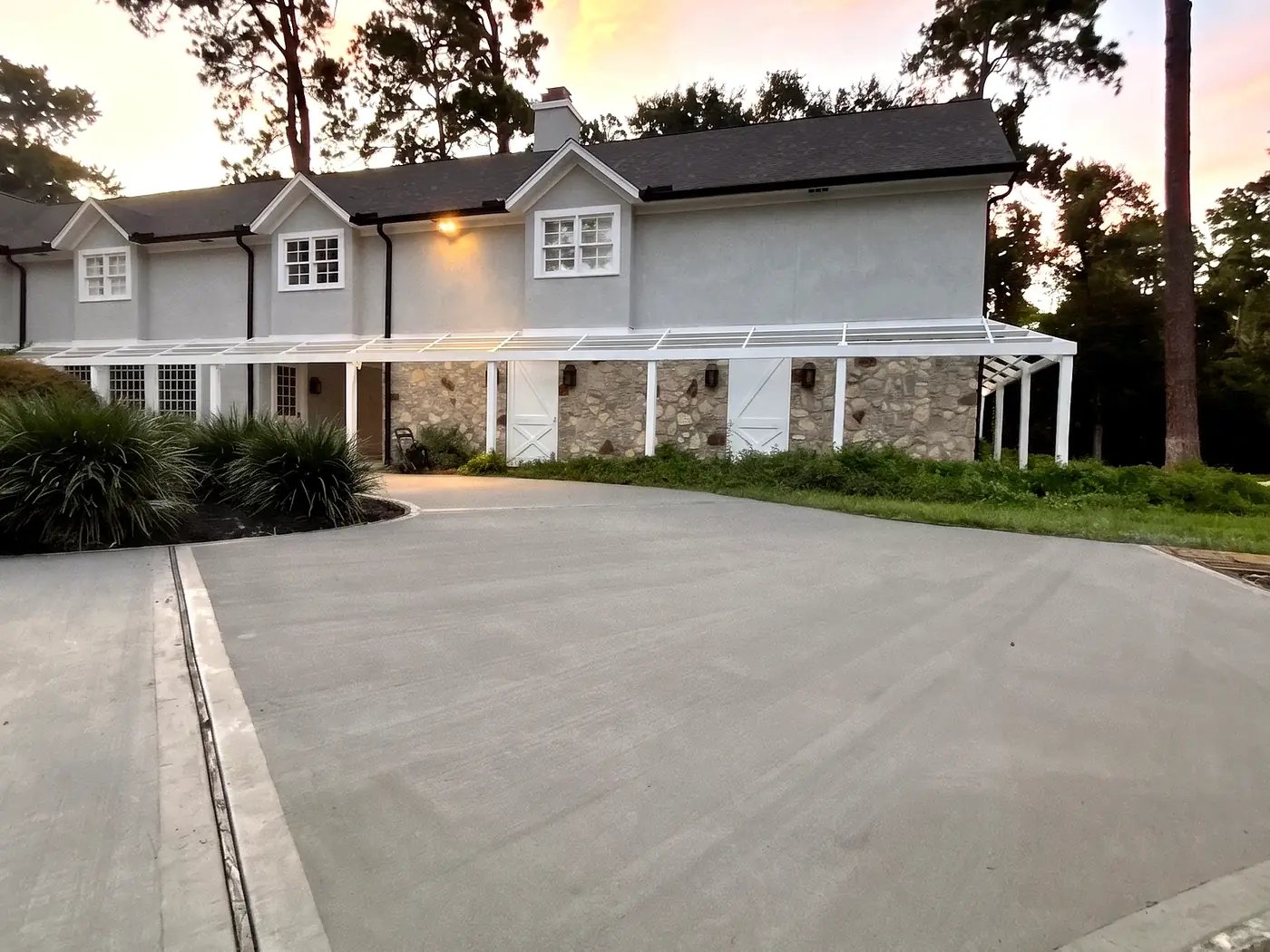
Real pours from the crew and founders behind Blue Jay, developed straight from jobsite photos.
THE STANDARD WE BUILD TO
Our spec, applied to
your driveway
- Prepared subgrade. Soft spots and organics out before anything goes down.
- Compacted select fill base. Imported fill that stays put, compacted in lifts, photographed.
- Steel on chairs. Rebar held in the middle of the slab, right where it does its best work.
- 3,000–4,000 PSI mix at 4 inches minimum. Thicker where the load demands it.
- Saw-cut control joints. Cut at proper spacing and depth so cracking happens on our lines, not yours.
- Cure window honored. Your drive-on dates come in writing.
WHY BASE PREP MATTERS HERE
Houston clay moves.
We build for it.
Most of greater Houston sits on expansive clay. It swells when it rains and shrinks through the dry months, over and over, every year. A driveway is a long, thin slab lying right on top of that movement: one end can be riding a wet swell while the other sits on shrinking dry ground.
You can't stop the clay, but you can build so it doesn't matter. The top layer of movement-prone soil gets replaced with compacted select fill. Steel positioned to actually work holds the slab together as one piece, and the edges are graded so water sheds instead of soaking in.
Every item on that list is invisible the day after the pour, which is why we photograph it all before the concrete goes down. Our spec is published so you can see exactly what your job includes, and we're always glad to answer questions about any of it.
Three helpful questions for any driveway quote
- What base goes under the slab, how deep, and is it compacted in lifts?
- What steel is in the slab, and what holds it up off the dirt during the pour?
- Will you photograph the base and steel before you pour, and give me the photos?
Our answers are published, and the photos are part of every job. Whoever you hire, these questions will help you understand exactly what you're paying for.
STRAIGHT TALK
Concrete cracks.
Plan where.
We'll be straight with you: no driveway is crack-proof. Concrete shrinks as it cures, and shrinkage builds stress that has to release somewhere. The whole craft is deciding where.
That's what control joints are: planned cracks. We saw-cut clean lines into the slab at spacing planned for its dimensions (the rule of thumb is two to three feet per inch of thickness) and cut them deep enough, about a quarter of the slab's thickness, that the stress releases along the cut instead of wandering across your driveway. Timing matters too. The cuts go in as soon as the slab can take a saw, usually the same day, before shrinkage picks its own path.
Normal vs. worth a look
- Normal
- Hairline surface cracks, and cracking that follows the saw-cut joints. That's the system working as designed.
- Not normal
- Wide cracks, cracks where one side sits higher than the other, or cracks that keep growing. That's movement under the slab, the failure our base prep exists to prevent, and something we'd want to look at.
PATIENCE IS PART OF THE SPEC
When can I use my driveway?
Concrete doesn't dry; it cures, a chemical reaction that builds strength for weeks. Driving on it early is how a perfect pour gets wrecked in a day. Standard guidance for a residential driveway:
DAYS 1–2
Stay off entirely. Curing protection stays on and the slab does its first, most critical hardening.
AFTER ~48 HOURS
Foot traffic is fine. Kids, dogs, garbage cans: walking is fine, wheels are not.
AFTER ~7 DAYS
Cars and pickups can park and drive. Keep tight turns to a minimum the first week you're on it.
AFTER ~28 DAYS
Full design strength. Heavy vehicles (RVs, delivery box trucks, loaded trailers) wait until now.
Weather and mix move these windows, so we don't make you guess: your walkthrough paperwork includes the exact dates for your pour.
THE DECISION MOST HOMEOWNERS GOOGLE
Concrete vs pavers on Houston clay
Short answer: on Houston's expansive clay, the surface you pick matters less than the base underneath it. Both concrete and pavers ride on whatever was compacted below them, and clay movement finds weak base work under either one.
A poured concrete driveway
One monolithic slab over an engineered base, with steel holding it together and saw-cut joints deciding where movement shows. When the clay shifts, a properly built slab moves as one piece. Maintenance is low: joints and sealing, not individual repairs. The honest trade-off is that concrete cracks; good building decides where, and it never promises never.
A paver driveway
Individual units on a sand setting bed. Their honest advantage is repairability: one damaged unit lifts out and drops back in. Their weakness on clay is that every unit settles on its own, so movement shows up as dips, ridges, and wandering edges, and the joints invite weeds. Expect ongoing releveling as part of ownership.
We pour concrete, so read our leaning accordingly. But the reason we pour it on this soil is the same reason we publish the spec: the fight in Houston is with the base, and a slab lets us engineer, compact, photograph, and stand behind that base as one piece of work. If pavers fit your project better, hire a paver crew that treats its base with the same seriousness, and either way, ask whoever you hire to show you what's underneath.
ASKED OFTEN · ANSWERED HONESTLY
Driveway questions, honest answers
Will my new driveway crack?
Honestly, yes, a little. Hairline cracks are normal, and the significant cracking happens along saw-cut joints we place on purpose. What shouldn't happen is wide, uneven, or growing cracks. That points to trouble under the slab, which is exactly why we document the base, and why we're glad to take a look if anything ever worries you.
How long before I can park on it?
Walk on it after about two days, drive a car on it after about seven, and keep anything heavy off for about twenty-eight. You'll get the exact dates for your pour in writing, no guessing against a rule of thumb.
Do I need a permit?
Inside the City of Houston, driveway work usually needs a permit, and rebuilding the approach, the piece that crosses the public right-of-way to reach the street, gets its own review. Enclave cities like Bellaire, West University Place, and Southside Place run their own permit desks with their own rules. Farther out, unincorporated county land and HOA communities each draw the lines a little differently. We check what your address requires and tell you before we bid, so the permit question never becomes a mid-job surprise. Our service areas page has more on how we handle this across greater Houston.
Why do driveway bids vary so much?
Prices differ for real reasons, so it helps to compare what each bid includes: base depth and compaction, the steel and what supports it, whether demo and haul-off are covered, and the slab thickness throughout. Our quotes spell each of those out line by line, and we're happy to walk you through how ours is built.
Can you overlay my old driveway instead of replacing it?
Sometimes an overlay makes sense on a sound slab with cosmetic problems. But an overlay inherits everything under it. If your old driveway failed from the base down, a new layer on top fails the same way on a schedule. We'll look at yours and tell you which case you have, even when the answer is the cheaper job.
How long does a replacement take?
On site, it's measured in days: demo and haul-off, then base and forming, then the pour. After that the cure window runs, about a week before you park on it. Your quote includes the schedule for your job, in writing, before we start.
NO PRESSURE · STRAIGHT ANSWERS · HAPPY TO HELP
Quote your driveway from your phone
Stand at the street and take a few photos. Pace off the length and width. That's enough for us to come back with clear answers: spec, timeline, and a straight number within the week.