PATIOS & OUTDOOR LIVING · HOUSTON, TX · DESIGN FIRST · DRAINAGE BUILT IN

A patio is an outdoor room.
Pour the floor like one.

The finish sets the look. The slab underneath sets the lifespan. And the grading decides whether you're out there the evening after a storm or staring at a puddle for three days. We design all three together, starting with how you actually want to use the space.

FOUR FINISHES · ONE SLAB UNDERNEATH

Pick the surface, not the spec

Every finish below sits on the same Blue Jay slab: same base, same steel, same joints. The finish is the last inch. Compare them on look, footing, and upkeep, then let the budget conversation be about the surface you want, since the slab underneath never changes.

BASELINE

Broom

The workhorse. Honest texture, sure footing around wet furniture legs and bare feet, and the finish that makes the budget go furthest. Most patios we talk through end up here, and not as a compromise.

Look
Clean, uniform brushed lines
Underfoot
Best wet-weather traction of the four
Upkeep
Lowest; occasional cleaning

MID TIER

Exposed aggregate

The surface mortar is washed back to reveal the stone in the mix. Durable, hides dirt well, and reads as designed rather than default. A good middle path when broom feels too plain and stamped feels like too much.

Look
Natural stone texture, flecked color
Underfoot
Strong; the stone itself is the tread
Upkeep
Reseal every few years to hold color

TOP TIER

Stamped

Color and pattern pressed into fresh concrete. The most design control and the most skilled hours on the tools, which is why it sits at the top of the cost range. Done right it's striking, and a simple resealing schedule keeps it looking that way.

Look
Patterned: stone, slate, wood plank
Underfoot
Sealed surface can be slick when wet; texture and additives manage it
Upkeep
Highest; reseal on a schedule to protect the color

MID TIER

Stained

Color applied to cured concrete, on its own for a clean modern slab, or layered over stamping for depth. Flexible, and one of the few finishes you can add later, though pouring with the end look planned always beats retrofitting.

Look
Translucent or solid color over the finished slab
Underfoot
Follows the finish underneath it
Upkeep
Reseal to keep color from wearing in traffic paths

One thing worth knowing: every finish depends on the base under it, which is why our spec is the same under all four. Whichever surface you choose, the slab gets the same care.

POURED BY OUR CREWS

Patios off the trowel

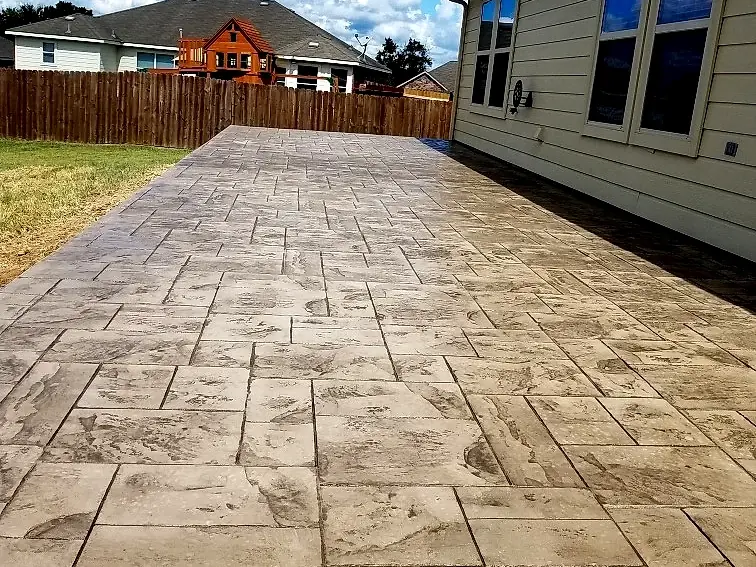
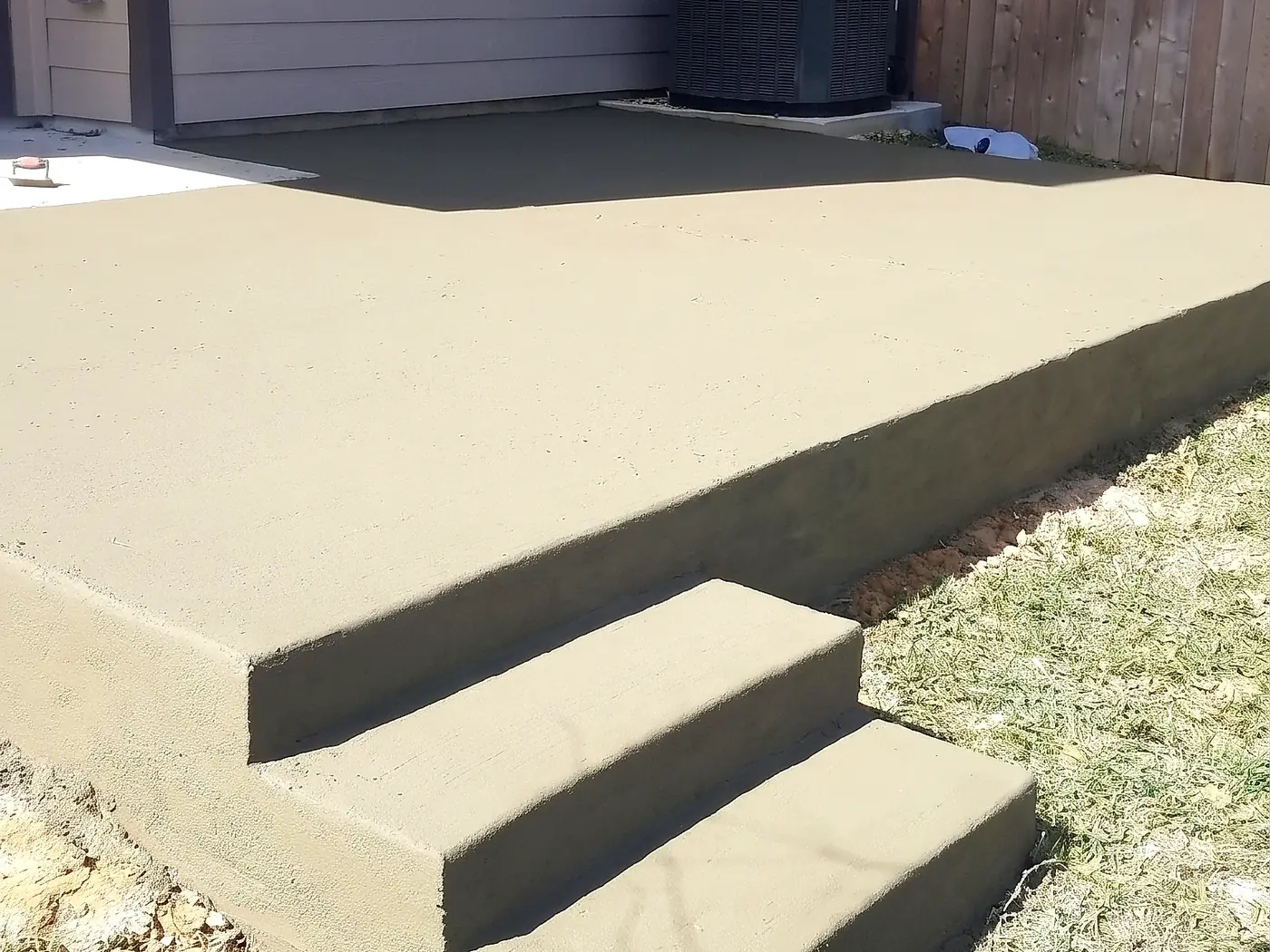
Real patio work from the crew and founders behind Blue Jay: a stamped surface lived on for seasons, and a pour still curing the day it was finished.

Stamped concrete patio in an ashlar slate pattern behind a home, under a blue sky
STAMPED · ASHLAR PATTERN
Freshly poured backyard concrete patio with integrated corner steps, still curing
FRESH POUR · INTEGRATED STEPS

THE NORTH HOUSTON PROBLEM

Standing water ruins
more patios than cracks do

North Houston yards are flat, and the clay under them drains slowly. Pour a patio without a drainage plan and you can end up with a slab that holds a puddle for days, breeds mosquitoes, and keeps the clay under its edges swinging wet-to-dry, which is exactly the moisture cycling that moves slabs.

Drainage isn't an add-on at the end. It's set in the first hour of layout, when we shoot elevations and decide where every drop of water goes. Fixing it later means demolition, so we design it in while it's only a string line.

HOUSE FALL ~1/4 IN. PER FOOT SLAB MEETS DOOR BELOW SILL COMPACTED SELECT FILL PREPARED SUBGRADE WATER EXITS HERE
SET WHILE IT'S STILL A STRING LINE

What we design before the first form

  • Fall built into the slab. The surface slopes away from the house (roughly a quarter inch per foot) so water leaves on its own.
  • Elevations against your thresholds. The patio meets your door below the sill, designed to shed water away from the house.
  • Downspouts accounted for. A patio that catches the roof's water needs a plan for it from the start.
  • A drain when slope isn't enough. Some lots can't shed water by grade alone. We'll tell you when yours needs a channel drain, and price it as its own line.

HOW THE NUMBER MOVES

Finish tier drives the price

Here's the useful thing about patio budgets: the slab, base, and steel cost about the same no matter which surface goes on top. The finish is the big lever. Broom is the baseline, exposed aggregate and stain sit in the middle, and stamped work tops the range because it carries the most skilled hours.

So the smart order is size first, finish second. Settle the footprint, then dial the surface up or down to meet the budget. We price the slab and the finish separately, which means you can change your mind about the surface without re-bidding the whole job.

See how we price

What your patio quote separates

  • The slab. Base, steel, concrete, joints. Fixed by footprint, not finish.
  • The finish. The tier you chose, priced as its own line you can adjust.
  • Drainage work. Grading beyond the slab, or a channel drain if the lot needs one.
  • Extras. Steps, borders, a thickened pad for a hot tub. Named and priced, never buried.

BEFORE ANYONE TALKS NUMBERS

Start with how you'll use it

Most patio quotes start with square footage. Ours start with a conversation about the space: where you sit in the evening, where the summer sun lands, where the grill lives, whether a hot tub is in the five-year plan. A hot tub matters now, not later, because it concentrates serious weight, and the pad under it should be designed for that from the first pour.

Bring photos of the yard and any inspiration you've saved. We'll talk layout, finish, and drainage, and tell you honestly which ideas fit the lot and which fight it. The final number comes after the design makes sense, so the quote reflects the patio you really want.

ASKED BEFORE MOST POURS

Patio questions, answered

Which patio finish costs the least?

Broom is the baseline, and it's not a compromise: honest texture, the best wet-weather traction of the four, and the lowest upkeep. Exposed aggregate and stain sit in the middle of the range, and stamped tops it because it carries the most skilled hours on the tools.

Is a stamped patio slippery when it rains?

The sealed surface can be slick when wet, and texture and additives manage it. Stamped also carries the highest upkeep of the four finishes, so plan on resealing on a schedule to protect the color and keep it looking the way it did on day one.

Can I add color to a patio after it's poured?

Stain is one of the few finishes you can add later, since it goes on cured concrete, either on its own for a clean modern slab or layered over stamping for depth. That said, pouring with the end look planned always beats retrofitting, so tell us early if color is in the picture.

Does picking a fancier finish change the slab underneath?

No, and that's the useful part: every finish sits on the same slab, with the same base, steel, and joints under all four. The finish is the last inch, which is why our quotes price the slab and the finish as separate lines, and you can change your mind about the surface without re-bidding the whole job.

How do you keep water from standing on a patio?

The fall is built into the slab itself, roughly a quarter inch per foot away from the house, with the patio meeting your door below the sill, designed to shed water away from the house. Downspouts get a plan from the start, and when a lot can't shed water by grade alone, we'll tell you it needs a channel drain and price it as its own line.

We might add a hot tub someday. Does that matter now?

It matters now, not later. A hot tub concentrates serious weight, and the pad under it should be designed for that from the first pour. Bring it up in the design conversation and the thickened pad shows up as its own named line on the quote.

NO PRESSURE · STRAIGHT ANSWERS · HAPPY TO HELP

Show us the backyard

Send photos of the space and tell us how you want to use it. We'll talk layout, finish, and drainage before anyone talks numbers.